Unlocking Blue Economy Opportunities for MSMEs Through Strategic Partnerships
Kenya is endowed with vast Blue Economy resources across the coastline, Lake Victoria, and numerous inland lakes. These resources present significant opportunities to transform livelihoods for communities living around the country’s water bodies. Recognizing this potential, the Blue Economy has been identified as one of the priority value chains under the Bottom-Up Economic Transformation Agenda (BETA).
The State Department for Micro, Small and Medium Enterprises (MSMEs) Development continues to prioritize initiatives that empower small businesses to participate meaningfully in emerging sectors such as fisheries, aquaculture, water transport, tourism, and other blue economy-related enterprises.
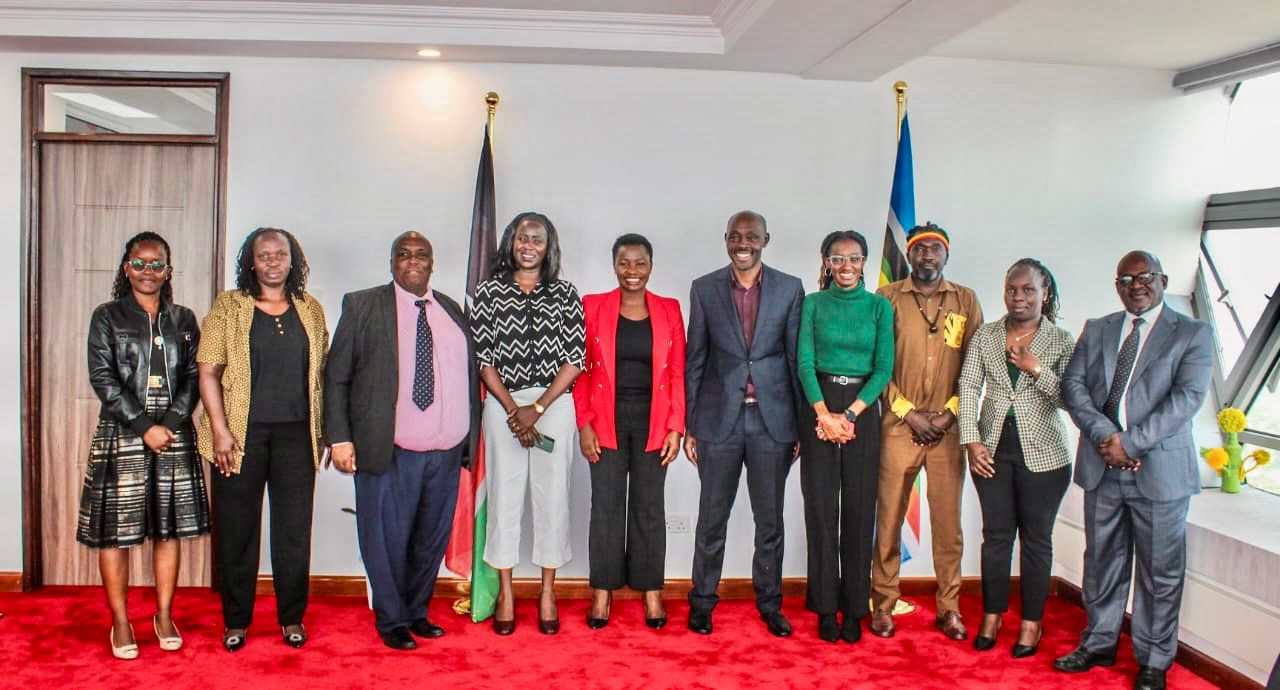
In a move aimed at expanding opportunities for MSMEs within the blue economy value chain, the State Department led by PS Susan Mangeni hosted a delegation from the Food and Agriculture Organization (FAO) to explore collaborative strategies for strengthening enterprise participation in the sector.
During the meeting, discussions focused on the establishment of a working group that will guide efforts to optimize MSME engagement in blue economy activities across the country. The proposed establishment of a working group will support in:
- Improving entry and ease of doing business for MSMEs in the blue economy sector.
- Strengthening production systems to enhance productivity and sustainability.
- Optimizing local value chains around fisheries, aquaculture, and other blue economy resources.
- Enhancing access to international markets for blue economy products.
- Addressing structural constraints that hinder MSME growth and competitiveness.
- Developing blended financing approaches to support enterprises seeking to scale their operations and compete globally.
To further strengthen MSME participation, the State Department is championing key reforms aimed at improving the business environment. These include the adoption of unified business permits and the decriminalisation of work, measures that are expected to significantly reduce regulatory barriers and simplify compliance requirements for entrepreneurs.
Such reforms are designed to create a more enabling ecosystem where small businesses can innovate, grow, and contribute meaningfully to Kenya’s economic transformation.
Recognizing that skills development is another critical pillar in strengthening MSME participation in the blue economy, the State Department is working to identify Technical and Vocational Education and Training (TVET) institutions located in blue economy regions and support them in developing tailored training programmes aligned with local value chains.
These programmes will equip entrepreneurs and communities with practical skills needed to participate in fisheries, aquaculture, processing, logistics, and related industries.
Importantly, the initiative will also integrate indigenous knowledge systems, empowering communities to commercialise their local knowledge while preserving cultural heritage and promoting the sustainable use of natural resources.
By strengthening partnerships, removing barriers, and investing in skills and innovation, the State Department for MSMEs Development aims to unlock the full potential of the blue economy while ensuring that local enterprises and communities remain at the centre of this transformation.
Through these efforts, MSMEs will play a critical role in driving sustainable economic growth, creating jobs, and enhancing the livelihoods of communities across Kenya’s coastal and inland water regions.